
Discerning Methods of Success


John Reese
Searcy, Arkansas
President Emeritus


As we celebrate 50 Forward, you have seen the astounding figures—conservatively, some 40 million worldwide have received World Bible School lessons. Many thousands have responded to the Gospel. In nation after nation, many of today’s leaders first came to know Christ and His church through WBS. What is the secret of World Bible School’s success?

Paul spoke of evangelism in these terms: “I planted, Apollos watered, but God gave the growth” (1 Corinthians 3:6). The increase comes from God and rebounds to His glory. Yes, He works through humans, but they are not “anything,” just “jars of clay” (1 Corinthians 3:7; 2 Corinthians 4:7). The power is not in us. Rather, God placed His divine power into the seed that is planted and watered.

Whatever our evangelistic methods, the only seed of success is the living Word of God with its kernel the Gospel (Luke 8:11; 1 Peter 1:23-25; Romans 1:16). That truth explains the success of WBS. WBS courses direct the Student to focus on the Scriptures—often printed in our booklets in red for visual emphasis. God’s Word does the teaching. Course after course presents the Gospel and offers its invitation. The seed germinates in receptive hearts that yield multiplied harvests.

The WBS difference is how much seed is sown and where. Seed carries life. But, powerful as is the potential, nothing happens while the seed remains in a bag on a shelf. It must be distributed. To sow on a small patch of ground is to assure a small harvest. If the seed is spread abundantly, covering much land, the harvest is greater. Following this principle, WBS mobilizes thousands of seed sowers. They cast so broadly that the good soil becomes evident. That is, the most receptive regions of the world respond well, which attracts more sowing and even greater harvests. That does not imply neglect for other regions. WBS Students are found in virtually every nation on earth. Often, when the first missionaries arrive in new or difficult areas, converts already reached through distance learning are assembled as the first congregations.

God works through seed sowers like WBS teachers. He also works through His servants who water and nurture for greater fruitfulness. We call this Follow-up. Over a 50-year history, WBS has built up many partnerships and networks of Christians who help with Student recruitment and Follow-up. In our new method of Ocean Bridge, we seek to improve lesson turnaround and thus Student retention. With your help, we are in the beginning stages of learning how to best pursue Follow-up for these Students.

The ultimate partnership is with God Himself. In the case of WBS, He has positioned it for even greater fruitfulness in the years ahead. He provides the workers and the means for wider, more efficient distribution of the Gospel seed. This is God’s mission. He directs it. He empowers His saving seed. These truths assure us that the first 50 years are the first fruits that herald even greater harvests ahead!

Related Posts

Types of Precedents – One More Chapter, Season 2, Episode 17

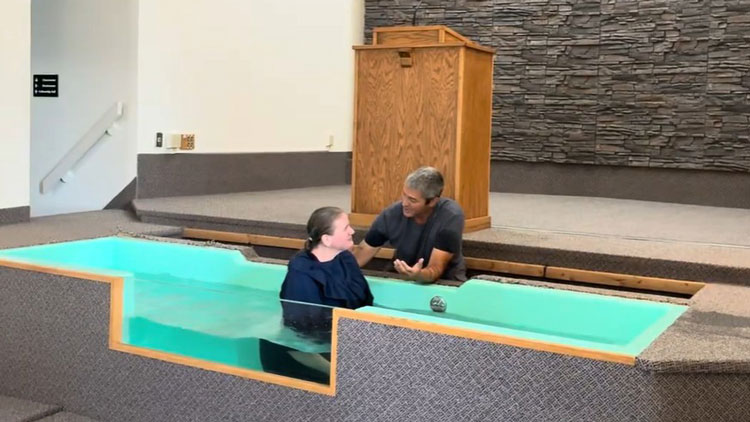
In this episode of One More Chapter, Brian Rex Davis and his co-hosts Noah and Bryson Continue their discussion of the concepts of purpose, principle, and precedent and how they help bridge the gap between meaning and application. They classify different types of biblical precedents—such as accepting both the practice and principle of baptism, retaining principles while adapting culturally bound practices like greetings or modesty, and rejecting both when Scripture indicates—and illustrate necessary inference through Peter’s experience with Cornelius in Acts 10–11.

Purpose and Precedent – One More Chapter, Season 2, Episode 16

This episode of One More Chapter continues the series on Bible study principles for bridging the gap between a passage’s original meaning and its application today. Hosts Brian Rex Davis, Noah Davis, and Bryson Davis review “purpose” and “principle,” then focus on “precedent”, emphasizing how approved apostolic examples establish binding patterns when they carry theological significance—while incidental details do not.

Follow Us on Social Media

Contact Us