Postal
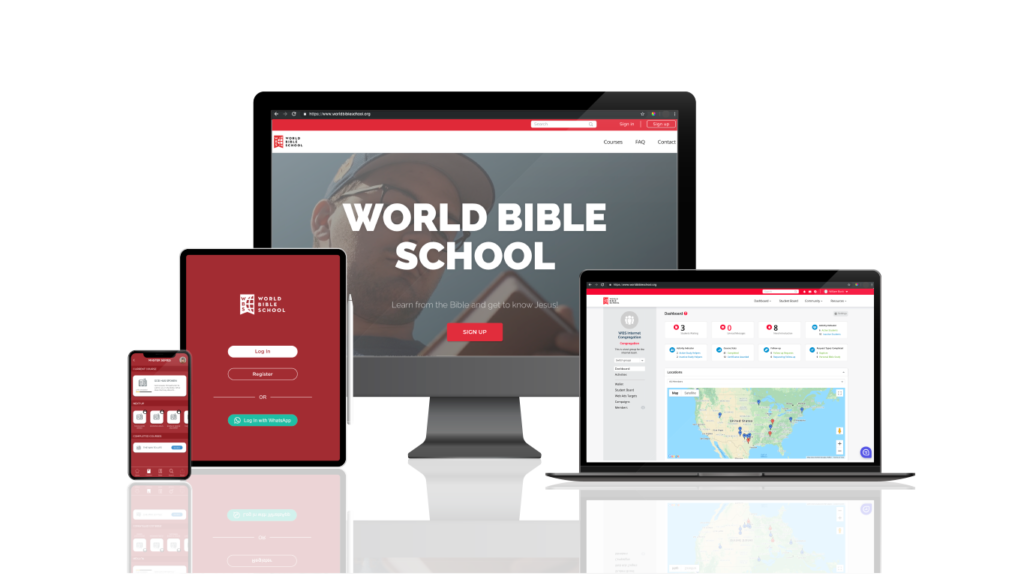
Postal is method of teaching the Master Series, WBS core curriculum, to Students seeking to know Jesus by mail.


There are moments in life when we are desperate for God to speak. We don’t always say it out loud, but the cry is there. A mother sits beside her child’s hospital bed before a major surgery, holding a small hand and wondering what the next few hours will bring. A missionary listens to a new widow in an African slum and searches for words of comfort. A preacher looks out into the eyes of his congregation on a Sunday morning and feels the weight of knowing that human wisdom is not enough. In moments like these, the unspoken cry is, “Lord, please speak.” But He has!
God has spoken in ways that a child can memorize,and a theologian can spend a lifetime trying to fully grasp. He has spoken through a book, or more accurately, through a collection of books. However, the Bible is not some random archive or anthology of man’s spiritual musings. It is God’s own complete revelation of His will to man.
Every verse is true, but no single verse stands alone like a lighthouse on some isolated rock. Rather, each one must be understood in harmony with the whole. If we want to hear the voice of the living God, we must listen to the whole symphony, not merely a single note. That symphony, composed by God, was played out by his chosen instruments, inspired men living in the real world and rooted in real cultures. The languages is not of this revelation, Hebrew, Aramaic and Greek, were not celestial tongues unknown to mankind. They were the everyday speech of farmers, merchants, soldiers and scribes. Much like Jesus took on flesh and walked dusty roads, so God’s message clothed itself in the expressions, idioms, and writing styles of ancient peoples. Divine truth steeped into human language.
This does not weaken the Bible’s authority; it deepens it. God could have given us a book so transcendent that no mortal could grasp it. Instead, He gave us a revelation that can be translated into hundreds of languages and understood by men and women in every corner of the world. Yet because Scripture came through revelations stretched out over centuries, God did not give us a single tidy volume laid out in topical or chronological sequence.
He gave us a library, sixty-six books, to be exact. Genesis reads nothing like the Gospel of John, and the thunderous tone of Isaiah bears little resemblance to the pastoral warmth of Philippians. God’s messages came in stories and songs, laws and letters, prayers and parables, warnings and promises. Each book must be studied and understood according to its genre of literature, whether that be history, law, prophecy, wisdom literature, poetry, narrative, parable, apocalypse or epistle. A proverb must be heard differently from a prophecy. A lament psalm must be interpreted in a different light than a legal statute. A parable is not a scientific diagram. An apocalyptic vision is not a newspaper article. God invites His people not simply to read, but to study.
He wants us to linger over the words, and to wrestle with them. Such is the intention behind the biblical concept of meditation. Scriptures should be savored slowly like a hard candy, not munched thoughtlessly like a handful of popcorn. As we study, we can marvel at the harmony across pages that span centuries.
“The bibles communication is not intended to be detached from relationship and relationship requires time, listening and growth.”
The lazy technique of plucking a single verse out of its home and pressing it into service for our own preferences is not the path of true understanding and can so easily lead us astray. Every verse is true; every verse is authoritative; but no verse is complete in isolation. The good Bible student must give Scripture a patient, disciplined hearing: book beside book, covenant beside covenant, prophesy beside fulfillment. We should receive the Scripture as God passed it down to us, rich, layered and remarkably unified.

Some people stumble over the Bible’s complexity. Why not a simple manual? Why not a comprehensive reference manual with a handy FAQ section? Why a sprawling library gathered across centuries? While that might sound appealing, it misunderstands how God chooses to communicate. He does not just give us information alone. He gives us Himself. The Bible’s communication is not intended to be detached from relationship. And relationship requires time, listening and growth. A manual can be skimmed; the Bible must be lived.
To handle Scripture carelessly is to treat God’s voice lightly. To handle it rightly is to open ourselves to transformation. When Paul stated in 2 Timothy 3:16 that “all Scripture is inspired by God and profitable,” he was declaring that every page, every genealogy, every oracle, every prayer, every thought, was breathed by God and shapes His people for His purposes.
The Bible is not merely ancient histories. It is divine communication relevant to you and me. Its truths are not locked in the past. They are alive, wandering into our daily activities, challenging our assumptions, comforting our griefs, and calling us to holiness. When we study Scripture with its languages, its genres, and its contexts, we are not performing academic exercises. We are learning to hear our Father’s voice more clearly.
Yes, God has spoken. His revelation is complete; His message is trustworthy; His voice is steady across every page. And when we open the Bible, we step into the long conversation between God and His people. It is a conversation that still changes lives, still shapes His church, and still speaks with divine authority. So let us come to the Scriptures with reverence and expectation. Let us handle its library with care. Let us study, wrestle, pray, and rejoice in its pages. For in the Bible, God speaks to you.

ACTION! is World Bible School's flagship publication. Read inspiring success stories, tips on how to share the Gospel with others and updates on WBS and its tools!
What happens when you stop reading the Bible to confirm what you already believe and start reading it to meet God on His terms?

In Action Magazine, “Fruitful Follow-up” an opening statement from our president.
Applying biblical principles in our daily lives can be a challenge. Biblical principles often run counter to the cultures in which we live. Cultural influence can cloud our understanding of the Bible. To combat this, God gave us the ability to reason through these challenges and arrive at a place that aligns with His will. Join Brian Rex Davis and his two sons, Noah and Bryson, as they discuss necessary inference and how it is critical to Bible study and achieving a life aligned with God.

The Lord continues to add to His church at Free Bible Centre! 135 students are actively studying God’s Word through WBS
courses and are growing in knowledge and faith.