

A challenge that plagues many congregations is the lack of teachers. Regardless of whether it is teaching a Bible class or leading a personal Bible study, there is a shortage of willing and capable teachers in the church. So, how do we fill this need?
There are very few skills we expect people to learn and figure out on their own. In almost any career, there is a period of training. Yet in the church, we sometimes overlook this crucial step in skill development and expect people to volunteer for something they have never done before.
Teachers must be taught, and one way that happens is through mentorship.
“A mentor is not someone who walks ahead of you and tells you how they did it. A mentor is someone who walks alongside you to guide you on how you can do it” (Anonymous). Mentoring teachers is more than simply asking someone to sign up to teach a class. Real mentoring requires a genuine investment of time and effort into the lives of others. Timothy did not automatically become a teacher when he became a Christian. He was guided there by people like Paul, Lois and Eunice. In mentoring His apostles, Jesus did not say, “Be fishers of men,” and expect that to happen overnight. Instead, Jesus said, “Follow me, and I will make you become fishers of men” (Mark 1:17). This is the language, attitude, and method of mentorship.
As with everything in Christianity, we look to Jesus for our perfect example. In mentoring His apostles, Jesus described how to teach, showed them how to teach, assisted them in practicing teaching, and empowered them to teach independently. It is such an effective model that many organizations use it today to implement effective skill transfer. The Boy Scouts of America created a helpful acronym to teach this same concept: EDGE (Explain, Demonstrate, Guide and Enable).
EXPLAIN
In Matthew 5, Jesus begins the Sermon on the Mount. In verse 19, Jesus reminds His audience, including some of His apostles, that they need to practice and teach the very things He was teaching. Jesus was not only explaining the need to teach, but also what the apostles should teach. As we mentor teachers in the church today, we need to explain not only how to teach but also what to teach. Provide mentees with study books, commentaries and supplemental material that will help them interpret and apply Scripture. Take time to verbally explain the process of teaching and how you approach planning, outlining and teaching a class. Offer periodic teacher training sessions or courses for individuals interested in learning how to teach.
 DEMONSTRATE
We cannot pick a single verse to illustrate how Jesus demonstrated teaching to His apostles. Read any of the Gospel accounts, and you will see that a large amount of the time the apostles spent with Jesus was spent watching Him teach others. Mentees need effective teaching demonstrated to them. Let mentees simply sit in a class for a quarter and observe the teacher. Expose them to multiple teachers and various teaching styles. Study Scripture together and show them how you create a class outline from the text. Demonstrate in private how you would go about teaching that to someone else.
GUIDE
In Matthew 10:5-42, Jesus begins to allow the apostles to practice teaching. However, He does not leave them to fend for themselves. Jesus tells them exactly what to say, exactly what to do, exactly what to expect, and exactly how to react to various scenarios. Jesus let the apostles start teaching on their own, but He didn’t abandon them. He guided them and walked with them as they began to learn the skill of teaching. Explaining and demonstrating are not enough to develop a teacher. Future teachers need practice and mentors to guide them through their practice. For younger Christians, courses like Teach to Teach, offered through the Lads 2 Leaders program, provide guided mentorship in the classroom. For older Christians, allow them to co-teach with an experienced teacher and incrementally increase their involvement. After spending some time observing a teacher, the mentee can begin preparing activities or small-group discussions. Eventually, this should be followed by teaching additional class content until they are prepared to teach a class independently.
ENABLE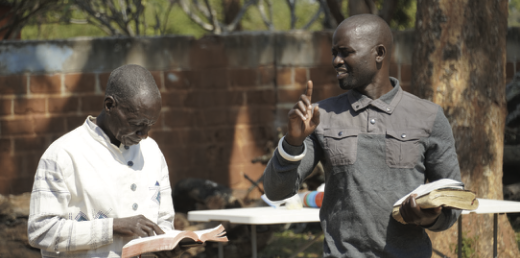
Finally, in Acts 1:8, right before His ascension, Jesus enables and empowers the apostles to do the very thing He has been mentoring them all along to do: teach the world about Him. Jesus knew that He had to go back to the Father and that others would need to take up the responsibility of teaching the Good News. So, He laid out that mission to the apostles and, due to the years of mentorship, they were willing, capable and ready to teach on their own. This is what we want to happen in our congregations. It may take weeks, months or even years, but after we have mentored by explaining, demonstrating and guiding, we must be willing to enable and empower the mentee to teach independently. In this stage of mentorship, encouragement is key. You should certainly provide constructive feedback, but you also need to be their biggest cheerleader and allow them independence in teaching. Be involved in their classes and be available when they need your help, but let them be the teacher. After all, this was the goal all along.
Through mentoring, we can teach and guide others to become capable, willing and effective teachers themselves. It takes an investment of time and energy, and it will not fix your immediate need for teachers. However, if we follow Christ’s model for mentoring, our congregations will eventually be equipped with an army of teachers that will bless His church for generations to come.